time zone will be applied.
Report this post?
I first went to Korea in 1966 as a soldier in the U.S. Army, where I was stationed along the DMZ. I became fascinated by Korea and decided to study at a university there after my enlistment was over in 1968. After spending another year in Seoul improving my Korean language skills, I was accepted by Korea University as a transfer student in March 1970.
In preparation for my studies, I read everything in English I could find (which wasn’t much) and several Korean books on Korean history, including most of the Chindanhakhoe’s seven-volume Han’guksa. Nonetheless, my first semester at KU was tough. We had no textbooks and no assigned readers. That meant we had to rely on lecture notes to prepare for exams and write papers. I had to copy lecture notes borrowed from my fellow students to survive. By my second semester, I was able to handle most of the workload on my own. By the end of my second year, I won praise from my professors for my Korean writing skills on term papers and, most crucially, my senior thesis on the late Silla revival of the Nogŭp system.
Our classes on Korean history ended with the annexation of Korea by Japan in 1910, so all my coursework was on what we then termed pre-modern Korea. A consistent concern was the refutation of arguments made by the colonial apologists for imperial Japan. The “internal development theory” was emerging as the master narrative on Korean history by that time. My courses on Koryŏ were organized around the question of the feudal stage of development, while my courses on Chosŏn focused primarily on non-elite social groups and the sprouts of capitalism. It soon became apparent to me that this reflected the influence of Marxist interpretations even though the professors eschewed the use of such terminology as class struggle or relations of production. It was a very different approach from what I had read in Chindanhakhoe’s books.
We were required to take 118 credits in our major, which left me, as a transfer student, little opportunity to take elective courses. I did manage to take a few courses in Confucianism, taught by a professor who was a New Confucian trained in Taiwan under Fang Dong-mei. He was very skeptical of the notion of history as linear progress and thus critical of the internal development theory as supportive of Park Chunghee’s developmental state policy.
The late 1960s and early 1970’s were years of great turbulence in Korea, marked by much student activism against the Park regime. Our classes were sometimes interrupted by student demonstrations and the ROK army occupied and shut down the Korea University campus in October 1971. Many professors showed great courage in signing statements calling for the restoration of democracy and several of my friends were permanently expelled from the university. All of this gave me some insight into the Korean struggle for democratization and the importance of our classes for that goal.
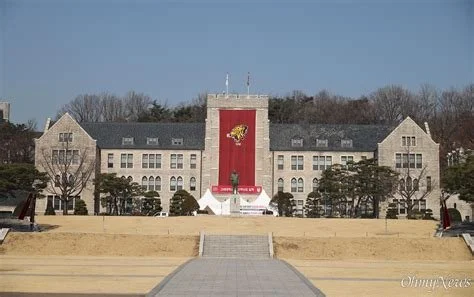
Korea University in the 1970s
John Duncan got his B.A. in history from Korea University and his Ph.D. in Korean History from the University of Washington. He was at UCLA from 1989 until 2019, where he taught in the Department of Asian Languages and Cultures and the Department of History. He has been a visiting professor at various universities throughout the world, including Harvard University, Kyushu University, University of Malaga, and Yonsei University. He has written widely on pre-modern and early modern Korean and East Asian history, with books and articles published in the U.S., Korea, Japan, Australia, Taiwan, France, Chile, Mexico, and Costa Rica. His major publications include single-authored monographs, edited/co-edited books, and translations, including The Origins of the Chosŏn Dynasty, Imperialism in East Asia in the Nineteenth and Early Twentieth Century: With a Focus on the case of Japan in Korea, Rethinking Confucianism: Past and Present in China, Japan, Korea and Vietnam, Reform and Modernity in the Taehan Empire, and Kang Man’gil, A History of Contemporary Korea (Koch’yŏ ssŭn Han’guk hyŏndaesa). He has received a number of awards for his scholarship, including the Korea Foundation Prize, the Manhae Prize for Academic Excellence, and the Yongjae Academic Award.
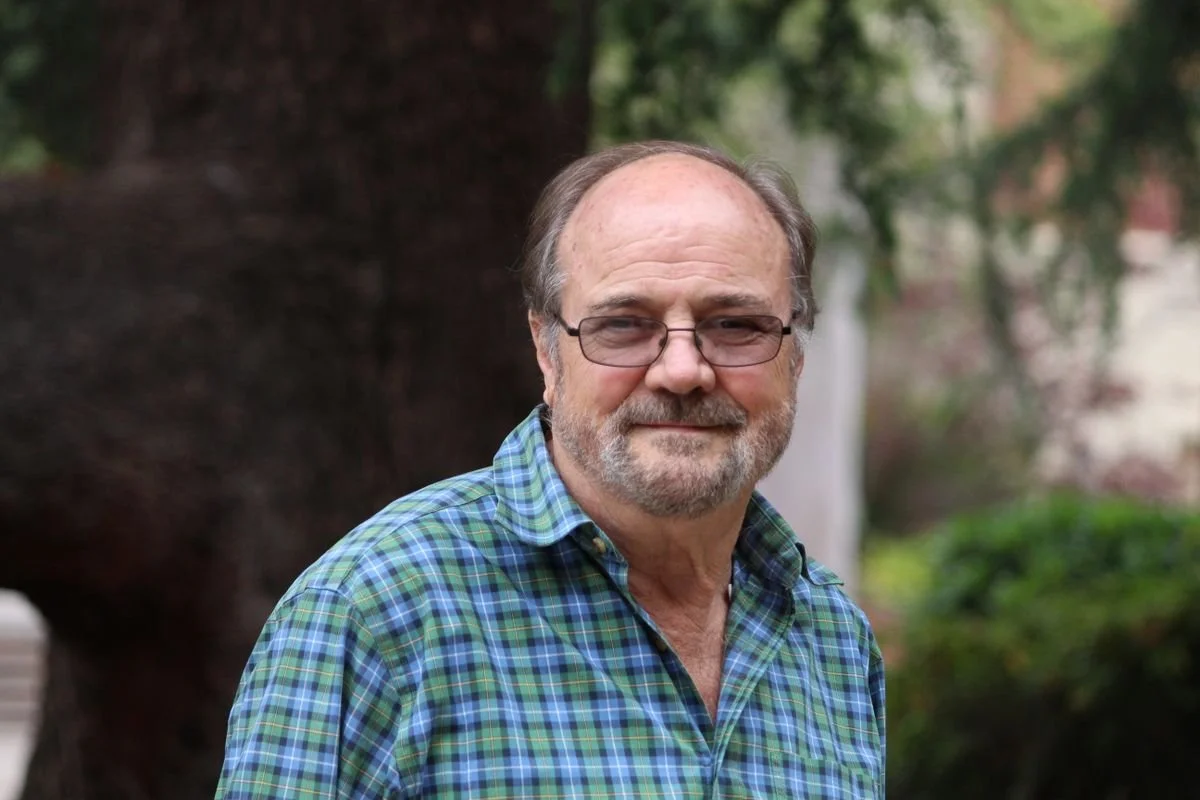
John Duncan
Luis Botella is an associate professor at the University of Malaga in the Department of Historical Science. His research interest has focused on the historiography and intellectual history of Korean history. He received his PhD from the University of Malaga in 2017 with a thesis titled “The field of Korean Archaeology in South Korea (1945-1979). Power relations in the Institutionalization and Professionalization of archaeology,” and has published several articles on the topic, dealing with different aspects of the power dynamics within the field of archaeology. Recently, he has published in Acta Koreana “Decolonizing the Periodization of South Korean Archaeology: From Fujita Ryosaku to Kim Wŏllyong and Han’guk kogohak kaesŏl.” Currently, he is expanding his focus of research to the field of ancient history in South Korea between the Liberation and the end of Park Chung Hee’s regime.